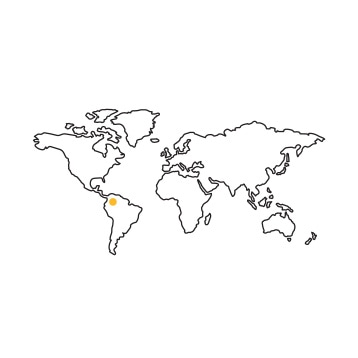
Country: Colombia
Town: San Isidro
State:
Antioquia
Municipality: Santa Barbara
Altitude: 1,950m above sea level
Variety: Chiroso
Farm Owner: Echavarría family
Processing:
Washed
Farm size:
70 hectares (35 under coffee)
Complex, floral and juicy. Guava, currants and nectarines.
About Lomaverde (with thanks to Melbourne Coffee Merchants):
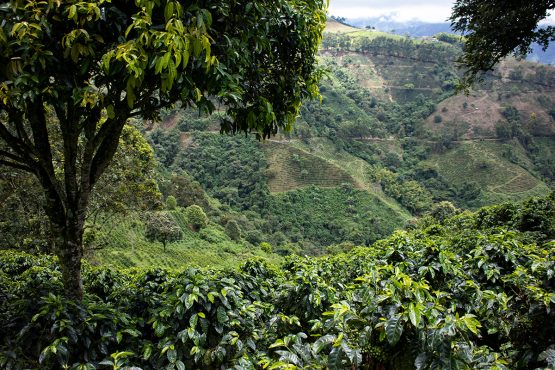
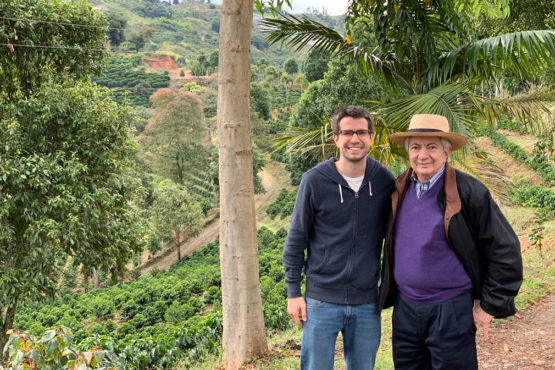
This 100% Chiroso microlot was grown and processed at Finca Lomaverde, a stunning farm owned by our good friends and longtime Colombian export partners the Echavarría family of Pergamino Coffee. Lomaverde was initially the largest of five parcels that made up Santa Bárbara Estate, which was established in the hills of the state of Antioquia by Pedro Echavarría Sr. in the 1970s. Today, the 70-hectare property (35 of which are under coffee) acts as the family’s beating heart in the region, as it has been transformed with a look towards the future by prioritising a more sustainable approach to farming while also introducing rare varieties and innovative processing methods that have resulted in some of the country’s most elegant and refined coffees.
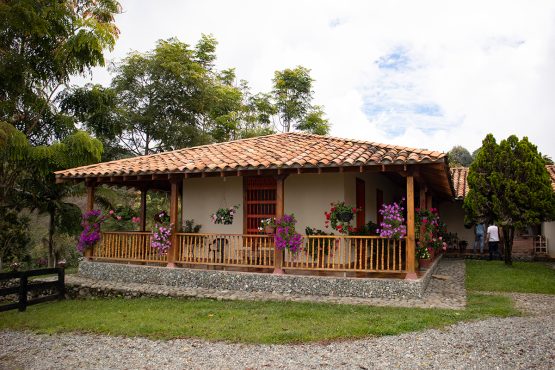
This change has had several benefits for the Echavarrías. Guided by the advice of Leo Henao, Pergamino’s Director of Coffee, and brother Juan (who provides agronomical support to all producing partners Pergamino source from), varieties like Chiroso and Gesha began to be planted throughout the farm, at lower densities than the old Caturra and Colombia trees. In practice, this has meant the farm can be managed more easily and carefully, as harvesters can select cherry based on sun aspect and site, to ensure only the very best are picked. Additionally, the change has left space for more shade to be established, and for pruning practices to be adapted to ensure it can happen more regularly without the need for stumping trees entirely.
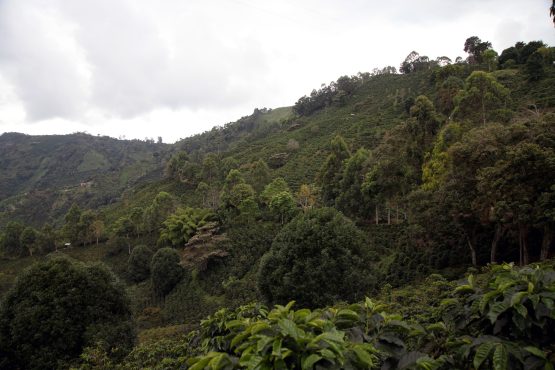
Many of Pedro’s strategies have been learned during his sourcing trips throughout Colombia’s coffee-growing regions. Here, he noticed that the different style of farm management applied by the small-scale producers they were buying coffee from was resulting in much better tasting coffees — with a lower environmental footprint. This focus on quality, rather than quantity, has also helped the Echavarrías devote more resources to protecting Lomaverde’s health. While a complete shift to organic has not been possible (yet!), the farm’s team have drastically reduced their reliance on chemical inputs. Most of this has been done through better manual control of weeds and through the application of an organic solution made with a compost of cherry husks, coffee pulp, spent grounds from Pergamino’s cafes and a mix of beneficial microorganisms. The farm feels as lush and healthy as ever, and the Echavarrías have positioned themselves as leaders of Colombia’s coffee industry well into the future.
ABOUT SANTA BARBARA ESTATE
Santa Barbara Estate was established by Pedro Echavarría Sr. in the 1970s, when he purchased a small, abandoned farm in his home state of Antioquia, in the north-west of Colombia. From the very beginning, Pedro Sr. recognised that selecting the right location for his farms was critical. For this reason, he chose to grow coffee high up in Antioquia’s side of the Andes mountain range, which had the perfect conditions to produce exceptional coffee, with a unique microclimate, rich volcanic soil and high elevations. His passion for coffee continued to flourish as the property eventually extended into the small town of Santa Barbara. By marrying hard work, precision and efficiency with ideal coffee-producing conditions, Pedro was able to increase the estate’s area under cultivation and develop a reputation as a quality-focused coffee producer.
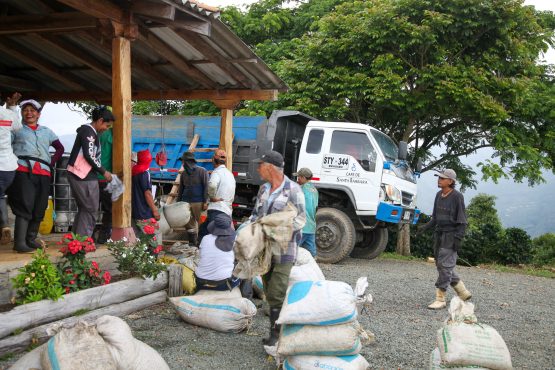
Today, some 45 people are employed year-round at Santa Barbara. Several of them also receive free housing for themselves and their families on the farm, with many having worked for with the Echavarrías for a decade or more. A further 120-150 seasonal workers are hired during the main harvest, comprised mainly of small-scale coffee producers from around Santa Bárbara, who pick coffee to supplement their income. The Echavarría family run extensive scholarship and financial aid programs for their staff’s children, and make an effort to help long-standing employees acquire their own piece of land upon retirement.
ABOUT THE CHIROSO VARIETY
The Chiroso variety was ‘discovered’ in the municipality of Urrao (also in the state of Antioquia), where it was initially thought to be a mutation of the Caturra variety, which is widely planted in the area. Chiroso was first selected and cultivated for its resilience to the cool climate of Antioquia, but eventually became recognised for its complex and floral cup profile – and the opportunity it presents in attracting higher premiums from specialty buyers. Coupled with the slow fermentation process typical to the region, this variety has resulted in some outstanding coffee lots (including Colombia’s 2020 Cup of Excellence winner, which Leo processed with right-hand person Jorge Cuéllar) and has brought international attention to this corner of Colombia. More recent DNA studies done on the variety have shown Chiroso to be an Ethiopian landrace variety (similar to the famous Gesha variety), though it is still unclear how it ended up in Antioquia, Colombia.